
Black Friday is one of the most commercially important days of the year, and that’s why so many brands worry about their Black Friday tracking.
With very high budgets and peaking traffic numbers, every conversion counts as well as every data point behind these conversions. In the weeks before Black Friday marketing and analytics teams work hard to build tracking setups and implement new tags to be ready before the Black Friday campaigns go live. With that kind of time pressure, it’s easy for something to break without anyone noticing.
In this blog we describe how most brands currently prepare for Black Friday and why that way of working is outdated.
Why tracking matters most on Black Friday
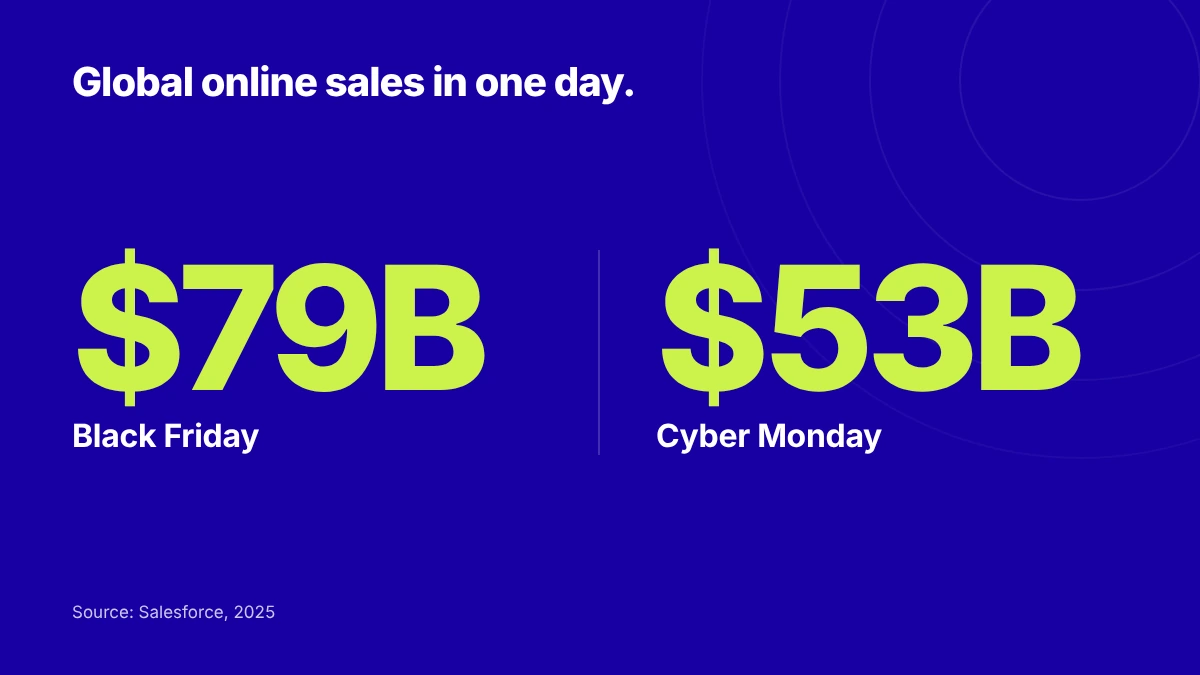
In 2025 according to Salesforce, there was $79 billion generated in global sales on Black Friday. Cyber Monday generated $53 billion in global sales.
Now imagine tracking breaking during the peak hours of Black Friday. Ad platforms receive wrong data when it matters most. They then optimize based on bad data, badly hurting the ROAS in the period of the year with the highest ad budget. A nightmare for agencies or performance marketing teams. Imagine having to explain to your boss that tracking issues arose on Black Friday of all days.
Why tracking typically breaks on or right before Black Friday
At Code-Cube.io we see that most issues come from a simple source.
Yes, engineering teams typically lock down deployments two weeks before the holiday weekend. That doesn’t sound too bad and is well on time before the holiday weekend starts.
But think for a moment about the marketing side of things. Does the marketing department have everything ready two weeks before the holiday? The answer is no. Marketing teams are by nature dynamic. They need to push last minute promos, pixels and make Google Tag Manager (GTM) tag changes. Making these changes comes with an increased risk of your Black Friday tracking breaking silently. When that happens, it’s often hard to know what part of your data collection has been impacted until after the holiday weekend.
The current checklist most brands use
So what is the best way to ensure tracking is pristine before the shopping weekend? Until now, most brands have been manually checking whether their Black Friday tracking was ready. The following pillars of tracking QA are still being widely used, despite their downsides.
1. Audit your GTM container
It takes someone from your team a few hours, but it’s doable and still a very common way to prepare your tracking for the holiday weekend. You export your GTM container(s) and list tags, triggers and variables. You mark the most essential ones like the purchase event and its value, add_to_cart, Google Ads etc.
Also, you clean up your container by removing paused, duplicate and legacy tags. This way, you prevent one of the old elements from firing by accident and inflating purchase data, causing bidding algorithms to be affected.
Auditing your tag container(s) can be quite frustrating, boring and time consuming work for the person that’s responsible for it. Manually auditing your GTM container works, but it’s not something you do once and be done with. This process has to be repeated every so often, taking up your team’s time every time.
2. Test the full purchase funnel
This is a tedious task and takes up a large chunk of someone’s time but it has to be done. In GTM, you can use the Tag Assistant and go through the customer journey and test if tags work and fire as expected. For example, you can navigate the website, add a product to cart, go to checkout and test the payment. For these steps make sure the right tags fire once (not zero, not twice) and also keep an eye on your dataLayer to make sure it transfers the correct values.
Repeat these steps for the different funnels and scenario’s. Some examples are:
- Black Friday pricing and discount codes. The different pricing should also reflect a different revenue value than normal.
- Guest checkout and account checkout. Mobile and desktop. Different browsers.
- Refreshes on the purchase confirmation page. Sometimes refreshing can cause duplicate purchase data.
- Ensuring external payment providers work as intended.
- Purchases sent from both the browser and the server. If you send conversions to Meta or Google both client-side and server-side, check that each event carries the same event ID or transaction ID, so the platform deduplicates it instead of counting the sale twice.
3. Test consent mode
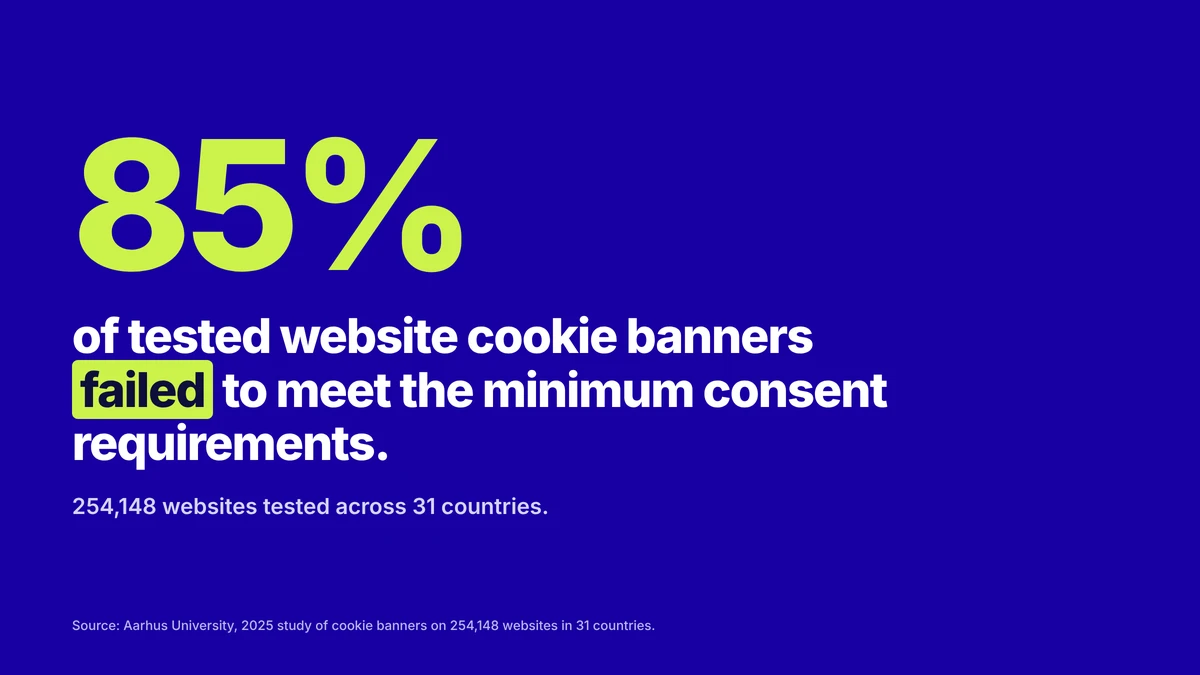
A study in 2025 published by researchers of the Aarhus University reported that 85% of tested website cookie banners failed to meet the minimum consent requirements. They tested 254,148 sites across 31 countries. Violating cookie consent rules can result in hefty fines. For example, Shein was fined €150 million by the CNIL in 2025 for placing cookies without consent.
To confirm if your website’s cookies meet the consent rules, you can manually test if data collection works as promised by running through the cookie banner and testing ‘only essential’, ‘accept all’ and the different partial options. Check if tags respect the different consent choices and that consent mode signals are sent correctly without violating consent rules. Also check that banner changes don’t block essential marketing tags from working properly, this is a well known reason for drops in conversion data.
4. Verify data in GA4 and ad platforms
It’s crucial to check if data actually arrives in your analytics and ad platforms. For example, check GA4 DebugView. When data is missing or is incorrect, you need to start a debugging process.
Even when doing all of the above it’s easy to make a small mistake or overlook a detail. After the weekend, when you compare the orders in your backend with the purchases reported in GA4 and your ad platforms, it might turn out that there is a large difference on a specific device, browser or for a specific campaign. By then the damage is already done and you will not be able to ever retrieve that missed data.
A perfect tracking setup is nearly impossible. Or is it?
You probably know like no other how much work it takes to keep your tracking reliable, especially around holiday peak moments. And the steps described above are just the tip of the iceberg.
In fact making sure your tracking setup is perfect and unbreakable requires a lot more work and is impossible to do manually. So isn’t there a better solution? Yes, there is, and top brands are starting to realize that no modern marketing stack is complete without it: Automated tracking QA and monitoring.
The only scalable way forward: automated monitoring
Securing and checking your tracking manually before and during Black Friday is not sustainable and scalable as it means you never find all the bugs, or you will never find them on time.
The purchase tag stops firing at 11a.m. because someone changed a promo banner. Smart Bidding sees conversions drop and lowers bids. Nobody notices until the day after. A simple mistake on Black Friday hurts revenue, can cause a significantly lower ROAS and that’s why automated tracking tools are gaining traction by large and forward thinking companies.
The case for SaaS “always on” monitoring
More and more businesses start to look for alternatives to tackle the challenges as described.
A monitoring solution, whether built inhouse or through an external vendor, removes the frustration and many downsides of manual QA. With a proper solution, teams get alerted instantly when tracking breaks. Your organization will never have to suffer from ‘silent tracking errors, your complete data pipeline will be monitored 24/7 and if you choose your solution well, your team even gets solutions offered per issue to fix the broken tracking faster than ever before. The business case is a no-brainer.
In the days leading up to Black Friday, organizations all over the world feel the pain of manual QA. You can ask your technical web analyst or agency… The logical result is that the awareness for automated monitoring tools is increasing.
There are a few very good automated monitoring tools on the market, and you will be surprised how affordable and easy to implement some can be.
Whether you are an agency or advertiser, you just deserve your advertising budgets to deliver the maximum ROAS, your team to spend time on valuable tasks and to have peace of mind about your tracking. It’s time to wake up, to break with the status quo and to start a (free) trial as soon as possible. Who would not want to start saving time instantly and have valuable insights by tomorrow?
El camino hacia una analytics sin errores empieza aquí
La instalación se realiza en unos pocos clics, ¡sin necesidad de desarrolladores! Nosotros nos encargamos la configuración. ¿Está listo?
inicie su prueba gratuita